When you click the link, it will take you to the corresponding page.
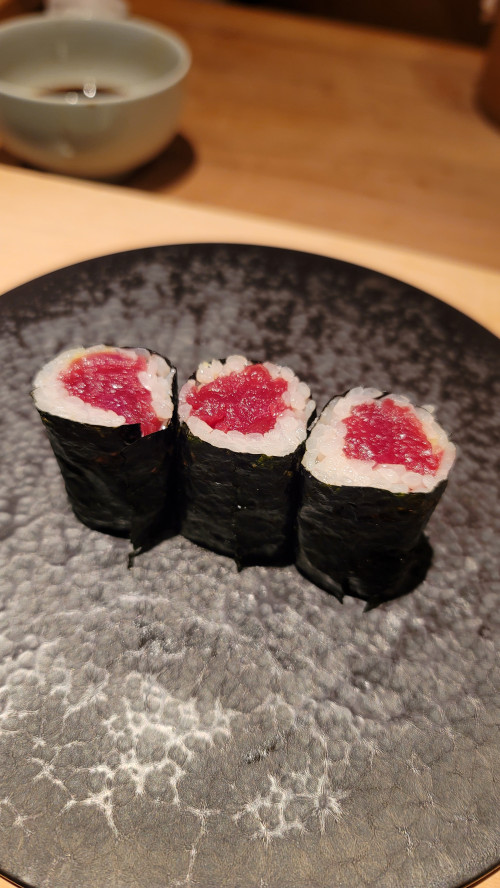
鉄火巻き
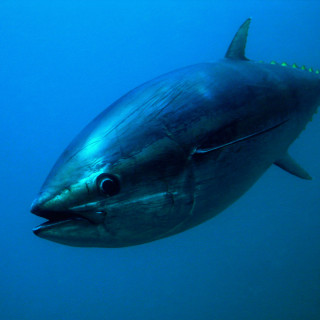
Japan is the largest consumer of tuna in the world. Although the history of tuna consumption in Japan dates back to the Jomon period (10,000 to 300 BC), where tuna bones have been found in archaeological sites, tuna was considered a difficult fish to handle compared to other fish because it spoils easily and loses flavor when dried or salted. The turning point for tuna becoming a national fish in Japan was during the Edo period when soy sauce fermentation (shoyu-jozo) became widespread. Marinating tuna in soy sauce improved its taste and preserved it better. Soy-marinated tuna, known as "zukezuke," gained popularity as an ingredient in sushi. Toro, which is considered a high-grade ingredient today, was actually a discarded part back then because it had a high fat content and couldn't be marinated in soy sauce while maintaining its quality. It was only after the development of freezing technology in the 1960s that the general public could easily consume toro as sashimi. In Japanese, tuna is called "maguro" (鮪 まぐろ). There are two explanations for the origin of the pronunciation "maguro." One suggests that it comes from the words "me" (目, meaning eye) and "kuro" (黒, meaning black), referring to the black eyes of the tuna. The other explanation suggests that it comes from the phrase "makkuro sakamata" (真っ黒逆叉), describing the dark appearance of a tuna swimming upside down when viewed from a boat.
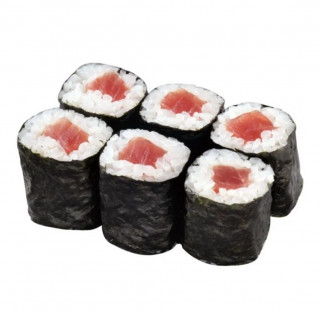
The names of sushi usually come from the "neta" (ingredients placed on top of the sushi, such as fish, shrimp, shellfish, or squid). However, the rolled sushi (makizushi) served in the latter half of omakase often has unique names unrelated to the ingredients. For example, rolled sushi made with tuna (maguro) red flesh (akami) and wasabi is called tekkamaki. But why is it called tekkamaki (鉄火巻き) instead of maguro maki (マグロ巻き)? There are a few theories about this. The first theory is that "tekka" (鉄火) originally referred to the state of iron turning red when heated or the sparks flying when hammered. The name tekkamaki is said to have come from the resemblance between the red color of tuna akami and heated iron. The second theory links the name tekkamaki to gambling culture. In old Japan, gambling dens were called "tekkaba" (鉄火場). Gamblers favored maguro maki as it could be eaten with one hand without getting their hands dirty during games, which led to the name tekkamaki. Both theories provide intriguing background to the name tekkamaki.